






Let’s have a frank discussion about data center energy use, when it can impact the cost of power and how people and businesses benefit from data centers. Why is this topic so charged and why does it matter? It’s because every single online event you cause to happen, directly or indirectly, is enabled by a data center.
And it's because every business “does business” through a data center. Finally, people are increasingly causing online events; businesses are doing more business. Which means more data centers are being built to meet demand.
Data Centers Aren’t Well-Understood
Media stories shape public sentiment, but they don’t always tell the full story. Often overlooked is that there are radically different types of data centers.
Most articles and broadcasts focus on hyperscale data centers, the very large, “hyperscale” facilities. So, when people hear “data center” they naturally think of hyperscale facilities, which account for about 75% of the energy used in data centers.1
What’s lost in discussion is multi-tenant data centers, which account for about 30% of the energy consumption and are typically 1/5th the size of a hyperscale facility.2 Paradoxically, most of the online events and business we talked about above happen in multi-tenant data centers, also called colocation data centers, that can have hundreds of customers in the same building.
The final point in this attempt to ground the discussion is that both hyperscale and multi-tenant colocation data centers are very energy efficient – it’s in their best interest to be so.
Enabling the Digital World
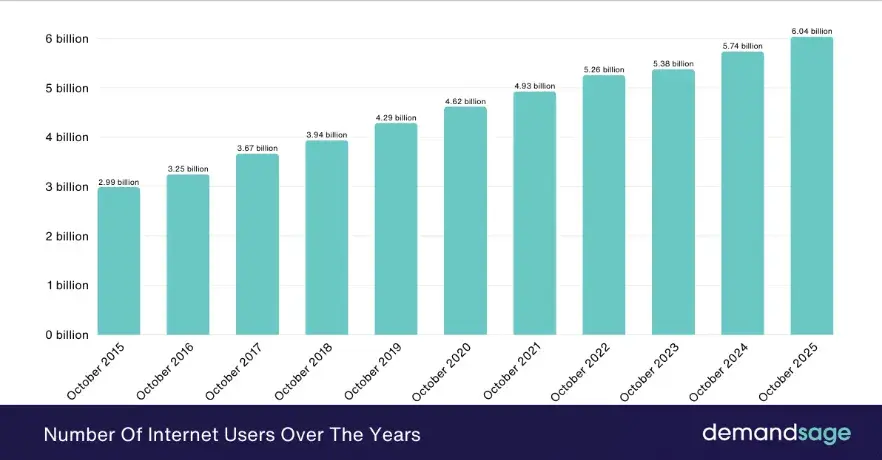
As the digital services engine, data centers serve consumers, businesses and governments every day by providing the infrastructure for:
-
Emergency services like 911 call centers, suicide/help hotlines and cancer research
-
Healthcare patient records and telehealth
-
Online banking and real-time financial analytics for trading
-
Online learning and higher education research
-
Social media, emails, text messages and gaming
-
Generative AI like ChatGPT and embedded AI built into devices and systems that use the internet
Additionally, a data center near you improves the performance and reliability of digital services by:
-
Reducing latency, the time it takes for data to travel from its source to the location where it’s processed and back
-
Providing fast disaster recovery for hospitals, utility companies and government services
-
Increasing the service quality of video streaming, video conferencing, VoIP and cloud applications
Data Centers and Power Usage
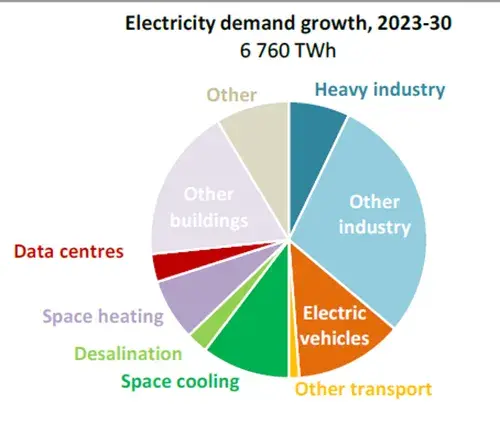
Source: International Energy Agency
A data center is a user of power like every other business in a community. All businesses are subject to applicable regulations and state and local laws throughout planning, construction and operation. Power companies are involved from the beginning of a data center project, and they approve the amount of power usage.
A data center doesn’t necessarily increase the power rates of a community. In some situations, data centers may help to stabilize or decrease community rates. For example, a former Environmental Protection Agency liaison to the data center industry says that a Georgia plan to build new data centers is keeping electricity rates steady.3
Some studies suggest that higher electricity demand can lower prices. One report points out that states with the highest load growth from 2019 to 2024 experienced reductions in real prices (average retail electricity prices), whereas states with contracting loads generally saw prices rise.4
To increase rates, power companies typically request rate increases through an agency like a public utilities commission.
Only approved rate increases can be passed on.
AI is another theme in the data center power story. That’s because it’s part of many digital services we use – Siri, Bixby, Alexa and ChatGPT, for example. AI is virtually everywhere now, assisting us on our phones or chatting with us about customer service issues or analyzing financial transactions to detect fraud. Many AI workloads need GPUs. Non-AI workloads can run on CPUs. According to a recent Forbes article, the servers which use GPUs can consume more than 20 times the power of standard Intel-based CPU cloud servers – and output 20 times more heat per server.5 AI workloads increase the power needed for processing and the power needed for cooling.6
What Causes Power Rate Increases?
There’s a lot to consider in regard to changing electricity rates other than data centers, including the fact that community power rate increases can’t be attributed to a single cause. The Lawrence Berkeley National Laboratory identifies seven key drivers of state-level retail electricity changes from 2019 to 2024. The report reminds us that average retail electricity prices vary across states, and retail price changes can be temporary or longer term, depending on whether costs are related to immediate recovery or long-term risk reduction. Here’s the list of drivers (“beyond economy-wide inflation”):
-
Replacement and hardening of distribution and transmission systems
-
Extreme weather and wildfires: recovery and mitigation
-
Natural gas price variability
-
Customer load growth
-
Utility-scale wind and solar (market-based)
-
State Renewables Portfolio Standard policies (regulations that require electric utilities to obtain a specific percentage of their electricity from renewable sources)
-
Net energy metered solar (a billing method that assigns credit to owners of solar energy systems for excess electricity they generate and send to the grid)7
In the context of overall electricity demand growth, data centers represent a small slice of the pie, as we saw in Figure 1 above.
How Does Renewable Energy Fit into Power Usage?
The use of renewables is a complicated topic, as you can see from the bullet points below. Using renewable energy from the grid isn’t always possible or feasible for data centers for a few reasons:
-
Integrating renewables into a data center is intricate and expensive, given moving parts such as infrastructure updates, regulations, energy storage and reliability
-
Local utility companies may not have the transmission lines to deliver renewable energy to data centers
-
Supply chain issues can make it difficult for utility companies and data centers to get their hands on the necessary equipment
-
Sources of renewable energy aren’t always reliable; data centers need to run 24/7 to keep digital services running reliably
Renewable energy is part of the solution to meet rising demand for digital services, but as a Wesco article points out, “getting this power to the data center remains a significant hurdle.”5 In the meantime, some data centers are exploring and implementing onsite power generation via solar, wind and battery storage to meet a portion of their overall power needs or provide a temporary solution while waiting on local grid power.
What Data Centers Do for People and the Economy
Data centers play a critical role in our economy, and they contribute quite a bit to our national well-being. The headline of a recent Fortune article reads, “Without Data Centers, GDP Growth Was 0.1% in the First Half of 2025.” The article goes on to say that U.S. GDP growth in the first half of 2025 was almost entirely driven by investment in data centers and information processing technology.8
An Urban Land Institute report includes this list of data center benefits – a lot to think about as we go about our daily lives:
-
Protect the privacy of data within U.S. borders against cyber threats
-
Host critical infrastructure for emergency services
-
Support healthcare such as telehealth visits and records management
-
Enable banks and other financial entities to conduct daily operations
-
Support the development of emerging technology, much of which involves AI
-
Contribute to our competitiveness in the global economy
-
Provide access to supercomputer processing and secure cloud storage, leveling the field for small and large businesses9
The Future of Data Centers and Power Usage
We all use power. We all depend on data centers – for Instagram, banking, shopping, business operations, emergency services, healthcare research and much more. We all play a part in data center growth. Increased demand for digital services leads to increased demand for data centers.
Ideally, everyone involved — data center builders and operators, data center tenants, data center associations, communities, state and local governments, public service commissions, energy companies and policy makers — will work together with transparency to address power issues and provide education that tells the full story.
Know More
Visit CoreSite’s Knowledge Base to learn more about the ways in which data centers are meeting constantly increasing power and other infrastructure requirements.
The Knowledge Base includes informative videos, infographics, articles and more, all developed or curated to educate. This digital content hub highlights the pivotal role data centers play in transmitting, processing and storing vast amounts of data across both wireless and wireline networks – acting as the invisible engine that helps keep the modern world running smoothly.
References
1. Data Center Power Consumption Statistics, Report 2026, Worldmetrics.org, (source)
2. 2024 United States Data Center Energy Usage Report, Lawrence Berkeley National Laboratory, (source)
3. Real Clear Energy, Don’t Blame Data Centers for Rising Electric Bills, September 23, 2025 (source)
4. Science Direct, Factors Influencing Recent Trends in Retail Electricity Prices in the United States, December 2025 (source)
5. Forbes, Why Liquid Cooling for AI Data Centers Is Harder Than It Looks, June 30, 2025 (source)
6. Lawrence Berkeley National Laboratory and the Brattle Group, Factors Influencing Recent Trends in Retail Electricity Prices in the United States, October 2025 (source)
7. Wesco, The Renewable Energy Transition: Considerations for Today’s Data Center, March 7, 2025 (source)
8. Fortune, Without Data Centers, GDP Growth Was 0.1% in the First Half of 2025, Harvard Economist Says, October 7, 2025 (source)
9. Urban Land Institute, Local Guidelines for Data Center Development, 2024 (source)