



The 2025 State of the Data Center Report shows that 98% of IT leaders have adopted or plan to adopt a hybrid IT model.1 Running workloads in a colocation data center is probably part of that model, so how does the cost of doing that get determined?
Not long ago, choosing a colocation provider was simple. You compared cabinet costs, power rates and uptime SLAs to find the most cost-effective option.
But those days are gone.
Today, colocation pricing still depends on space and power — but it is also about where your infrastructure lives, how it connects and how it enables modern workloads.
Breaking Down the Cost for Colocation
Colocation pricing is built around four primary elements: space, power, connectivity and services.
Space: The Container for Your Workloads
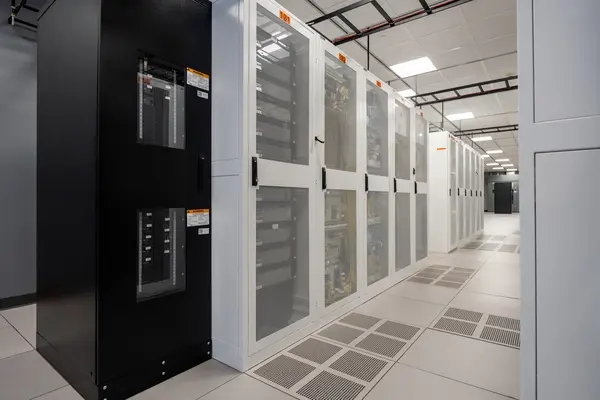
Space remains a primary factor in colocation pricing. The more physical room your equipment takes up, the higher your monthly cost. Providers lease space by the cabinet (or rack) with larger deployments secured in private cages or dedicated suites. Full racks provide lockable cabinets and room for future expansion, while partial racks or shared configurations can be more suited for smaller deployments or tighter budgets.
Location matters, too. High-density metropolitan facilities often carry relatively higher rates due to regional real estate and energy costs. However, if the data centers are multi-tenant facilities, they also could provide access to multiple carriers, cloud providers and connection to key partners in an enterprise workflow.
For latency-sensitive workloads, such as AI inference or real-time data analytics, even a few milliseconds matter. Placing infrastructure close to users or cloud resources can dramatically improve responsiveness. In today’s market, the right location is about optimizing the impact of your infrastructure and application performance as well as controlling costs.
Power and Cooling: Impact and Options
Power is often the biggest factor of a colocation bill. Customers are not simply paying for space — they also are paying for electricity delivered without fail to their equipment. There are options for how that cost is calculated, based on a set fee or monthly consumption.
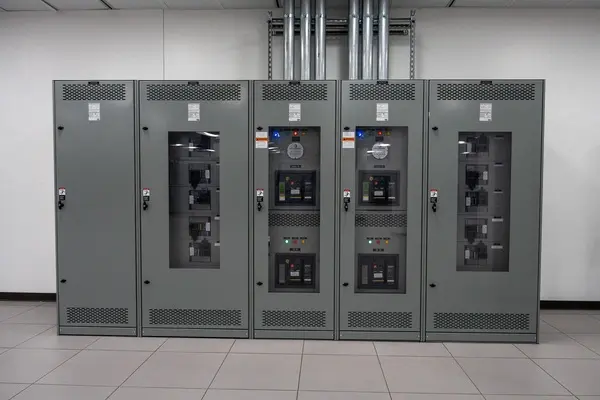
- Flat rate plans (based on committed kilowatts (kW)) with predictable monthly billing, although overage fees may apply if usage exceeds the contracted capacity.
- Metered plans (based on usage of kilowatt-hours (kWh)) which fluctuate with actual consumption, meaning customers pay only for what they use, but costs vary month-to-month, depending on workload demands.
Pricing is influenced by local utility rates, regional markets, and facility design. High-resilience sites with redundant power, backup generators and uninterruptible power supplies carry higher operational costs.
Cooling is another important consideration. High-density workloads, particularly AI or other real-time analytics applications, generate substantial heat. Traditional air cooling might be insufficient. In response, advances in cooling systems by Carrier and Johnson Controls, for example, now offer air-cooled solutions with Megawatt cooling capacity, and a chiller/free cooling hybrid approach.
Many modern facilities now deploy advanced cooling systems, including liquid cooling, which efficiently removes heat and supports performance. While premium, these systems are critical for long-term efficiency as well as emerging services such as neoclouds.
Connectivity: Getting the Most ROI for Bandwidth
While space and power support your infrastructure, connectivity is what makes it perform at its best and deliver the highest ROI. Bandwidth, capacity and redundancy directly influence how quickly and reliably your data moves in and out of the data center.
Bandwidth is typically sold in tiers, with higher speeds and dedicated connections carrying a premium. Cross connects, physical or virtual links to ecosystem partners, carriers and cloud platforms may incur additional fees. Facilities with dense ecosystems typically command higher rates — but the flexibility, reliability and low-latency network access they provide often outweigh the raw cost.
Connectivity is especially important for hybrid and multi-cloud deployments where workloads span multiple public clouds or private data centers. High-speed, low-latency connections ensure seamless data movement and consistent performance, making connectivity the backbone of a high-performance digital ecosystem.
Beyond the Basics: Services and Support
Beyond space, power and connectivity, most providers offer services that can simplify operations and enhance performance. Remote hands support helps with equipment installation, troubleshooting or cabling changes. Managed services, including monitoring, patching and backup solutions, reduce operational burden of internal IT teams.
Security and compliance services — from ‘round-the-clock physical security and video surveillance to support for regulatory requirements like HIPAA or PCI — further protect infrastructure. Select providers offer direct cloud on-ramps, interconnection to partner ecosystems and advanced network services that extend data center capabilities. These services save time, reduce risk and provide greater flexibility for businesses that require more than just the basic colocation footprint.
The Value of the Digital Ecosystem
While space, power and connectivity form the foundation of colocation pricing, the real value comes from the digital ecosystem surrounding your infrastructure. Modern workloads are distributed; applications are hybrid, and data flows continuously between environments. Servers are no longer isolated assets — they are nodes in a broader network that drives performance, efficiency and agility.
Leading colocation providers recognize this shift and have built highly interconnected environments that go beyond basic infrastructure. Features such as CoreSite products including:
- On-Site Cloud On-Ramps provide direct, private connections to major cloud providers, reducing egress costs and ensuring predictable performance.
- Open Cloud Exchange® enables software-defined, on-demand interconnections, allowing businesses to spin up connectivity in minutes rather than weeks.
- Any2Exchange® offers direct peering with hundreds of networks, lowering transit costs and improving routing.
Being a part of an ecosystem multiplies the value of your colocation investment. It improves performance, reduces operational and network costs, and ensures real-time workloads are run where they are most effective. In today’s interconnected world, colocation pricing is not just about what you pay — it is about what your infrastructure can achieve.
Know More
Curious how the right ecosystem can enhance your infrastructure?
Get in touch to explore how our colocation solutions can help you scale smarter and more efficiently.
%20copy.webp)
References
- 2025 State of the Data Center Report - Hybrid Infrastructure in the AI Era: How Colocation and Connectivity Empower Enterprise IT, Foundry and CoreSite (source)