


Unanticipated cloud costs have IT leaders rethinking their cloud solutions. Cloud conversations have traditionally focused on optimizing compute, storage and licensing expenses. But as businesses mature, their cloud strategies, another cost is demanding more attention: the cost of moving data.
Every backup replicated to the cloud, every artificial intelligence (AI) inference and every application synchronized between environments generates more and more network traffic — and the cost and complexity of moving that data can greatly affect spending.
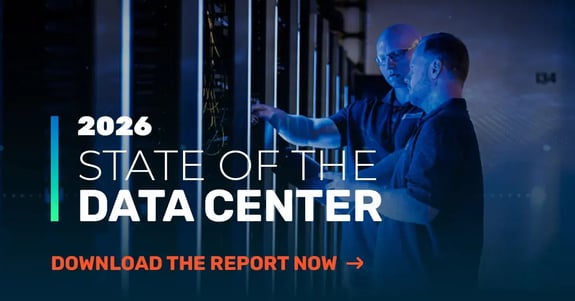
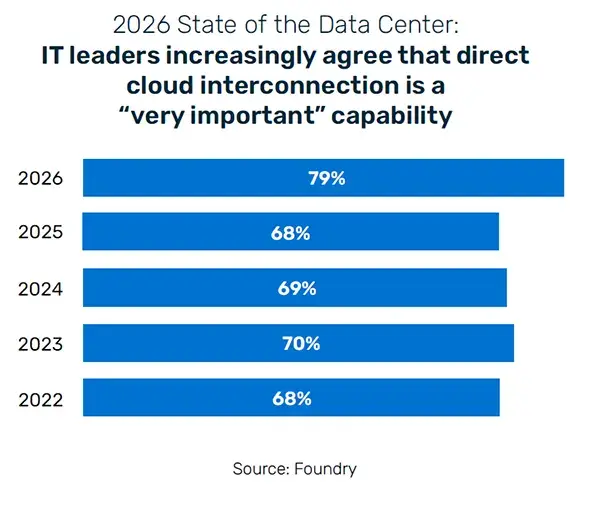
The cost of transferring data out of the cloud is changing what organizations expect from their infrastructure providers. The 2026 State of the Data Center Report found that 79% of IT decision-makers say direct connections to major cloud providers are very important when evaluating a colocation provider. Even more telling, every respondent said direct cloud connectivity was at least somewhat important — the first time in five years that cloud direct connection earned universal importance.1
The reason is simple: businesses are looking for ways to improve performance, reliability and security, while also better managing cloud costs. Where workloads run — and how efficiently data moves between these environments — can have a significant impact on their overall cloud strategy.
The Hidden Cost of Moving Data
Rising cloud expenses have shifted cloud discussions from “How much cloud capacity do we need?” to “How much data do we need to move, and what is the associated cost?” While data entering the cloud is generally free, data leaving the cloud — whether it’s transferred back to your data center, another cloud provider or an end user — is typically billed based on the amount of data transferred. Think of it as a “tax” to retrieve your data from the cloud.
Data egress fees vary by cloud provider, region, destination and type of service — and often they are packaged in tiers. Individual transfer costs may appear small, but they can add up quickly as the amount of data grows. While per-GB data egress prices have remained steady, data volume has grown 3-7x.2 Moving tens or hundreds of terabytes of data each month can generate tens to hundreds of thousands of dollars in annual data transfer expenses.
One recent survey revealed that 56% of organizations have been stifled by data egress and access fees, and 62% of respondents said they exceeded budgeted spending.3 As these businesses scale their cloud environments, recurring network costs can accumulate rapidly.
Why Data Movement Is Increasing
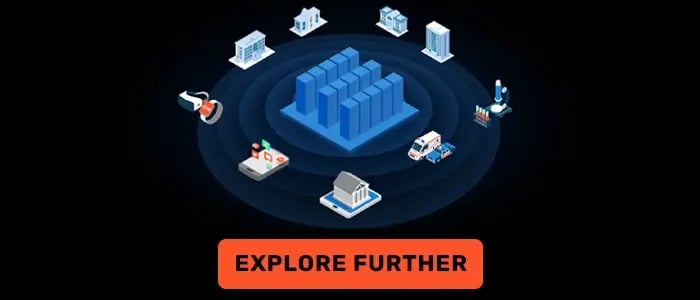
Cloud environments today look very different than they did just a few years ago. Businesses are deploying applications that process massive datasets and building latency-sensitive workloads that move continuously between cloud, edge locations, users and private infrastructure.
Common workloads driving higher data movement include:
- AI inferencing
- Disaster recovery (DR) and backup
- Database replication
- Real-time analytics
- Financial services applications
- Media streaming
These applications don’t just store data; they move it constantly. And the scale is only increasing, making networking decisions more critical than ever to help manage cloud efficiencies and costs.
Colocation Supports a Cost-Optimized Cloud Strategy
The most effective cloud strategy rarely places everything in the public cloud. A hybrid IT approach allows organizations to align workloads with the environment that best reins in costs and improves operational capabilities, including network performance and security.
What is Cloud Direct Connect?
A cloud direct connection is a private network connection between your infrastructure and a public cloud service provider, such as Amazon Web Services (AWS), Microsoft Azure, Google Cloud or Oracle.
Every IT infrastructure has its strengths. Public cloud platforms provide unmatched flexibility for swiftly changing workloads and on-demand compute, while colocation offers a stable, high-performance environment for storage-intensive applications or other steady-state workloads.
Colocation is not a replacement for the cloud — it’s a complement to it. With a direct cloud connect, your data travels across dedicated network infrastructure directly to the cloud, rather than over the public internet. These on-site cloud on-ramps provide businesses with a predictable and secure path to move data between the cloud and the colocation data center.
Carrier-neutral colocation providers like CoreSite that offer on-site cloud on-ramps ease deployment by providing direct access to multiple cloud environments from a single location. Through these direct cloud connections, businesses can connect to cloud services without relying on public internet routing for improved network performance, operational efficiency and cost control.
Direct Cloud Connections Can Help Reduce Cloud Costs
Cloud direct connect can help businesses minimize costs in two ways:
Reducing Egress Fees. Some cloud providers offer more favorable data transfer pricing for certain traffic moving over dedicated services compared with standard internet-based paths. Direct cloud connection avoids unnecessary network hops and provides predictable bandwidth for large, ongoing data transfers.
The savings can be significant. Businesses can reduce data replication expenses by as much as 70% using direct interconnection and eliminate data egress fees when restoring data from certain local cloud availability zones.*
Limiting Unnecessary Data Movement. The greatest opportunity, however, often comes from architecture decisions. One of the most effective ways to reduce cloud costs is to decrease the amount of data that leaves the cloud in the first place.
By keeping high-volume or steady-state workloads in colocation and using the cloud for applications that require on-demand compute, businesses can minimize the amount of data that must continuously move between environments, while still maintaining access to cloud services when they need them.
Direct cloud connectivity is becoming a foundational part of a cloud strategy, not just for improving performance, but also for controlling data transfer costs. Businesses that invest in the right connection, alongside the right mix of cloud and colocation, will be better positioned to build scalable, high-performance infrastructure for the future.
Know More
Watch our video to learn more about direct cloud connection and how it can support your hybrid IT strategy.
